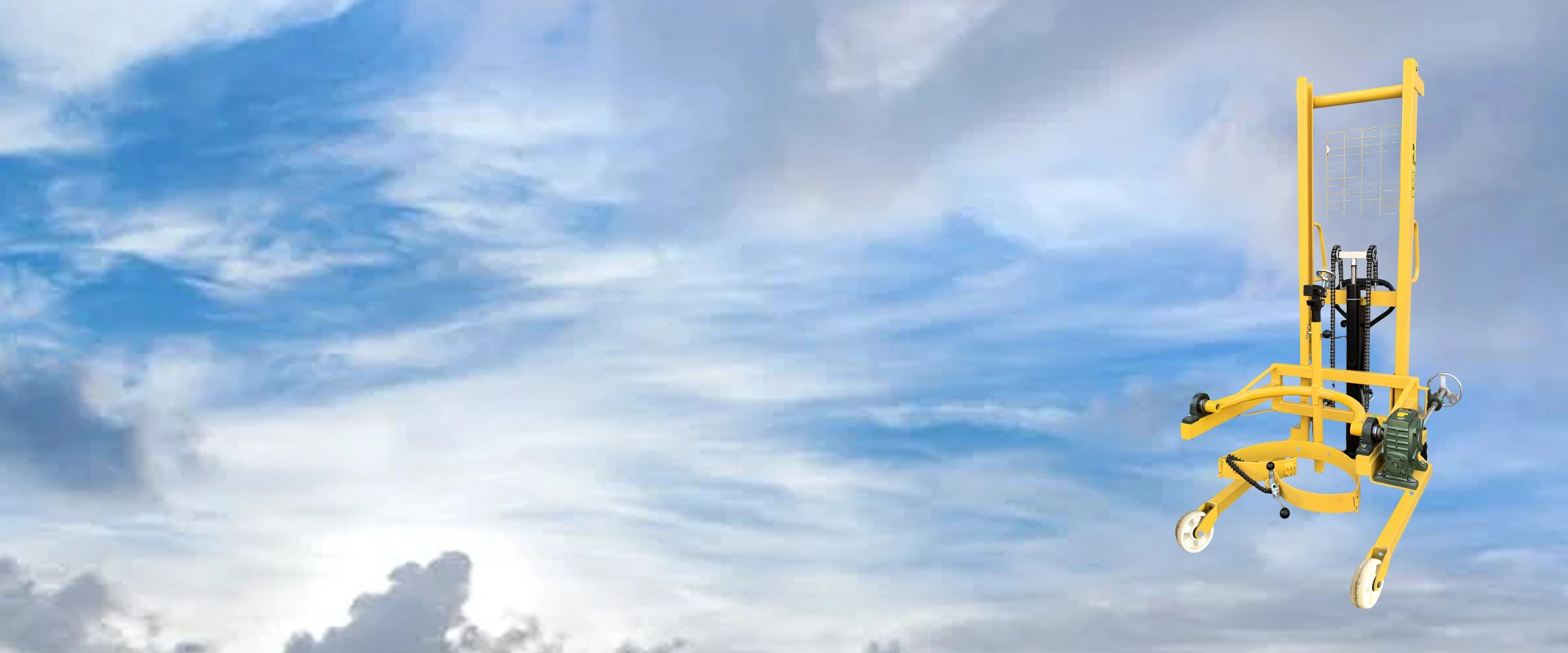
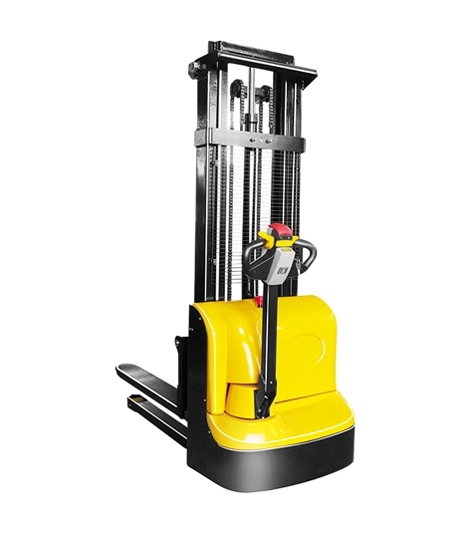
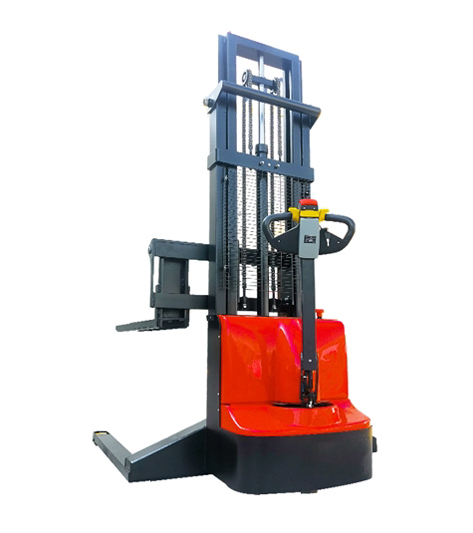
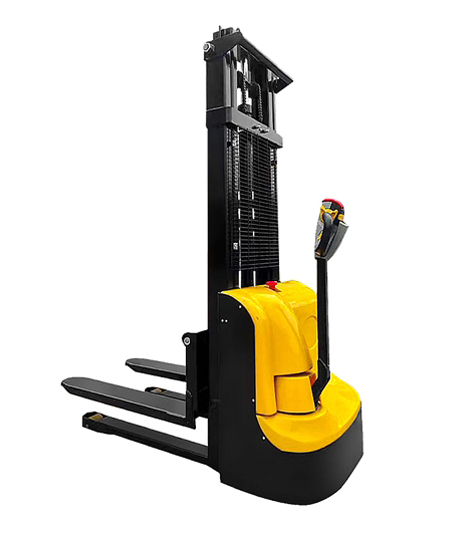
Power source: Manual stackers rely on human operation, using a manual hydraulic pump to lift the forks; electric stackers use an electric drive system powered by a motor to drive walking and lifting.
Operating intensity: Manual stackers require frequent manual pressing of the hydraulic pump handle to achieve lifting, which is labor-intensive, especially during frequent operations or when stacking heavier goods; electric stackers only need to operate control buttons to easily complete lifting and walking, significantly reducing labor intensity.
Work efficiency: The operating speed and lifting speed of electric stackers are usually faster than those of manual stackers, and they can operate continuously, completing more handling tasks in a short period of time, resulting in higher work efficiency. Manual stackers, on the other hand, have a relatively slow operating speed and lower efficiency.
Applicable scenarios: Manual stackers are suitable for places with low cargo handling volume, infrequent use, narrow spaces, and strict cost control; electric stackers are more suitable for warehouses, logistics centers, and other locations with high cargo handling volume and frequent operations.
Stackers are widely used in various scenarios that require stacking, handling, and storing goods, specifically as follows:
Logistics warehouse: In a logistics warehouse, stackers are used to transport goods from the unloading area to the storage area, and to stack them according to their type and specifications to make full use of warehouse space and improve storage efficiency. At the same time, when goods are shipped out, stackers can also be used to quickly and accurately take goods from the shelves and transport them to the shipping area.
Factory workshop: In the factory workshop, stackers can be used for the transportation and storage of raw materials, semi-finished products, and finished products. For example, they can move finished products from the production line to the warehouse's temporary storage area, or transport raw materials from the warehouse to the production line, achieving efficient material flow within the workshop and ensuring the smooth progress of the production process.
Supermarkets and shopping malls: In the warehouses and sales areas of supermarkets and shopping malls, stackers are used for shelving, restocking, and organizing goods. Staff can quickly transport goods to the shelves using stackers, arrange them according to display requirements, improve the efficiency and quality of product displays, and facilitate timely restocking to meet customer shopping needs.
The maintenance of stackers needs to be approached from multiple aspects. Here are some basic maintenance methods:
Daily maintenance: After each use, clean the body, forks, and wheels to remove dust, oil, and debris. Check for leaks in the hydraulic system, ensure hoses and joints are not loose, and confirm that the hydraulic oil level is within the normal range. At the same time, check that all control handles and buttons are responsive and effective.
Regular maintenance: At regular intervals (such as weekly or monthly), conduct a more thorough inspection of the stacker. Check the wheel wear condition; if severely worn, replace them promptly. Inspect the forks for deformation or cracks, and check if the chains are loose or worn, making adjustments or replacements as necessary. Lubricate all lubrication points, including bearings and joints, to ensure all parts operate smoothly.
Special maintenance: After using in harsh environments, such as those with high dust, humidity, or corrosive conditions, additional cleaning and protective measures for the stacker are required. Additionally, before long-term storage, the forks should be lowered to the lowest position, the power supply should be disconnected (for electric stackers), and regular charging should be performed (for electric stackers) to prevent battery damage.