What are you looking for?

When choosing between a stage electric hoist and an electric chain hoist, the right option depends mainly on the working environment, lifting requirements, safety standards, and control precision. A stage electric hoist is designed for entertainment, events, and temporary lifting applications where accurate positioning and quiet operation are critical, while an electric chain hoist is typically used for industrial lifting, workshops, construction sites, and permanent installations requiring reliable heavy-duty performance.
Before purchasing an electric hoist for sale, buyers should evaluate load capacity, lifting frequency, installation conditions, safety features, and application requirements rather than selecting a product based only on price.
The main difference lies in their design purpose and application environment.
A stage electric hoist is specially developed for stage productions, concerts, exhibitions, and event equipment lifting. It focuses on precise movement, smooth operation, low noise, and strict safety requirements. These hoists are commonly used for lifting lighting systems, trusses, speakers, and stage structures.
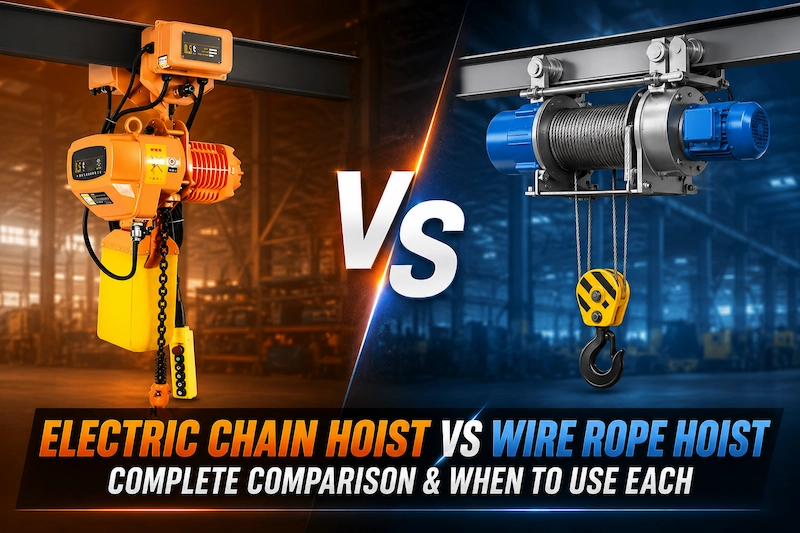
An electric chain hoist, on the other hand, is a more general-purpose lifting device widely used in factories, warehouses, maintenance operations, and industrial projects. It is designed for frequent material handling and heavy-load lifting.
Although both products use electric power and chain mechanisms, their internal designs, safety configurations, and operating requirements are different.
The correct choice depends on your application.
Choose a stage electric hoist when you need:
Precise lifting and positioning
Quiet operation during performances
Frequent installation and dismantling
High safety requirements for overhead loads
Compact and portable lifting equipment
Choose an electric chain hoist when you need:
Heavy-duty industrial lifting
Long-term fixed installation
Higher lifting frequency
Workshop or factory material handling
Reliable performance in demanding environments
Understanding the working conditions is the key factor in selecting the right electric hoist.
Safety is one of the most important considerations in stage applications because loads are often suspended above performers and audiences.
A professional stage electric hoist usually features:
High-strength load chains
Reliable braking systems
Overload protection
Precise lifting control
Stable load positioning
Compared with standard lifting equipment, stage hoists are designed to meet the special requirements of entertainment industries where vibration, noise, and movement accuracy are important factors.
Before purchasing an electric chain hoist, consider the following factors:
Select a hoist according to the maximum working load. Choosing a model with insufficient capacity may affect safety and equipment lifespan.
Different applications require different lifting distances. Confirm the required chain length before ordering.
Industrial users should consider duty cycle and operating frequency. Heavy-use environments require durable motors and reliable components.
Temperature, dust, humidity, and available installation space can influence hoist performance and service life.
A high-quality electric hoist should include safety features such as braking systems, limit switches, and overload protection.
In some cases, an electric chain hoist can be used for stage-related lifting, but it depends on the project requirements and safety standards.
For professional entertainment applications, a dedicated stage electric hoist is usually preferred because it provides better control accuracy, smoother operation, and features designed specifically for overhead stage loads.
Selecting a reliable supplier is as important as selecting the right hoist model. Professional manufacturers can provide:
Application-based product recommendations
Customized lifting solutions
Technical support
Quality inspection before delivery
Spare parts and after-sales service
For customers searching for an electric hoist for sale, working with an experienced manufacturer helps reduce purchasing risks and ensures long-term equipment reliability.
| Feature | Stage Electric Hoist | Electric Chain Hoist |
|---|---|---|
| Main Application | Concerts, events, stage systems | Industrial lifting, factories |
| Operation | Smooth and precise | Powerful and reliable |
| Noise Level | Low noise design | Standard industrial operation |
| Mobility | Easy installation and relocation | Usually fixed installation |
| Best For | Stage equipment lifting | Material handling |
Both stage electric hoists and electric chain hoists provide reliable lifting solutions, but they serve different purposes. Stage electric hoists are ideal for entertainment applications requiring precision, quiet operation, and enhanced safety, while electric chain hoists are better suited for industrial environments requiring continuous and heavy-duty lifting.
Before purchasing an electric hoist for sale, evaluate your application, load requirements, operating conditions, and safety expectations. Choosing the right hoist model will improve efficiency, reduce maintenance costs, and ensure safer lifting operations.
A stage electric hoist is mainly used for lifting stage trusses, lighting equipment, speakers, and entertainment structures.
Yes. Electric chain hoists are widely used for industrial and commercial heavy-load lifting applications.
Neither is universally better. The best choice depends on your application and working environment.
Check lifting capacity, lifting height, working frequency, safety features, and supplier reliability.
Choose a professional electric hoist manufacturer that provides quality products, technical support, and after-sales service.